Ultimate Slow-Pitch Softball Guide Must Have Gear For 2025!


Did you know using the right equipment can improve a softball player’s performance by up to 20%? That’s right, folks! Whether you’re a seasoned pro or just starting out, having the proper gear can make all the difference between striking out and hitting it out of the park.
As someone who’s been around the diamond more times than I can count, I’ve learned softball isn’t just about skill and practice – it’s also about having the right tools for the job. Trust me, I’ve made my fair share of equipment blunders over the years. Like the time I tried to bat without any batting gloves….let’s just say my hands weren’t too happy with me for a week with those blisters….Ouch!!
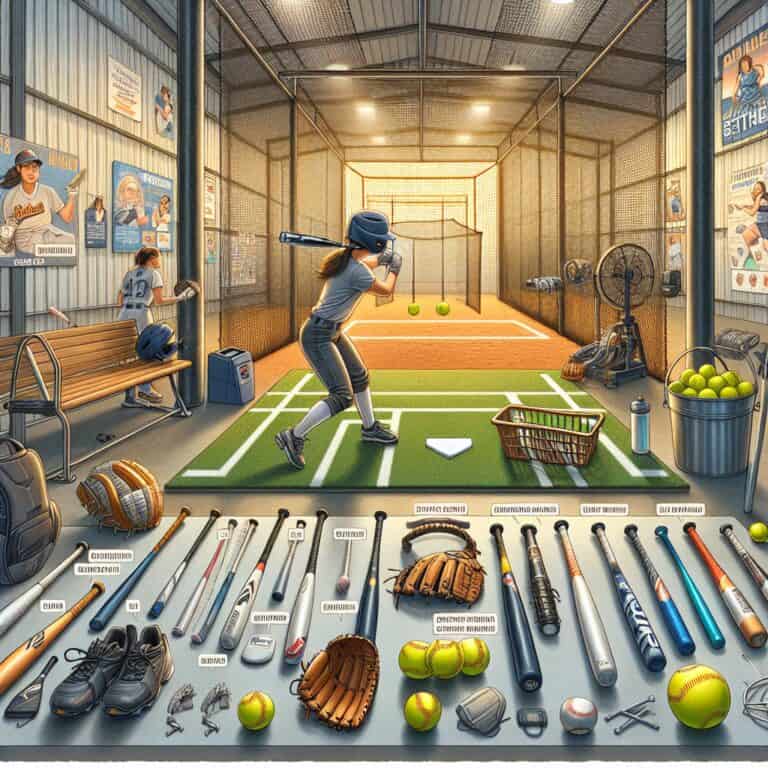
But don’t worry, I’m here to save you from making the same mistakes I did. In this ultimate guide to softball equipment essentials, we’re going to cover everything you need to know to gear up like a pro in 2025. From choosing the perfect bat to finding the most comfortable cleats, we’ve got you covered from head to toe.
So grab your favorite post-game snack (mine’s a good ol’ cheeseburger with extra pickles), and let’s dive into the world of softball gear. By the time we’re done, you’ll be equipped with all the knowledge you need to step onto the field with confidence. Batter up!
The Heart of the Game: Choosing the Right Softball Bat

Alright, let’s start with the big hitter – quite literally! Your bat is like your trusty sidekick on the field, so choosing the right one is crucial. I remember when I was first starting out, I had no idea there were different types of slow-pitch softball bats, let alone all the little details that go into picking the perfect one. But let me tell you, once I got educated, it made a world of difference in my game.
First up, there are all the different materials to consider – alloy, composite, and hybrid. I started out with an alloy bat because it was a lot more affordable, but let me tell you, once I got my hands on a composite model, it was a total game-changer. The larger sweet spot and lighter swing weight made such a difference in my power and control at the plate.
Of course, the weight of the bat is crucial too. And then there’s this whole concept of “bat drop” I had to wrap my head around. Basically, it’s the difference between the length and weight of the bat. A -10 drop means a 34-inch bat weighs 24 ounces. The lower the number, the heavier the bat. For me, I found that a -7 or -8 drop works best which is a 26 ounce or 27 ounce bat, but it really depends on your swing speed and personal preference.
Oh, and let’s not forget about the differences between USSSA (United States Specialty Sports Association) and USA Softball (Formerly ASA) bat standards! I made the mistake of showing up to a tournament with an illegal bat that didn’t meet the league requirements, and let me tell you, that was an embarrassing situation I never want to repeat.
Pro-Tip: Always double check your leagues rules and guidelines to ensure your equipment meets the standards of play.
USA softball bats shall be no more than 34 inches long nor exceed 38 ounces in weight as well as can’t have a BBS: (Bat Ball Speed) greater than 98 MPH. USSSA bats shall be no more than 34 inches long nor exceed 31 ounces in weight. All legal USA and USSSA softball bats must be certified and have their approved stamp on the bat.
I know, it can all feel a bit overwhelming at first, but trust me, once you get the hang of it, choosing the right slow-pitch softball bat is half the battle. And when you find that perfect match, it’s like having an extension of your own arm out there on the field. The sweet spot is just magic, and you can really feel the difference in your power and control.
So don’t be afraid to experiment a bit, my friends. Try out different models, lengths, and weights until you land on the one that just feels right. Your bat is the heart of your game, so treat it with the love and care it deserves!
Fielding with Finesse: Selecting the Perfect Softball Glove

Now, let’s talk about the other essential piece of equipment that can make or break your game – the softball glove. I’ll admit, I’ve had my fair share of glove mishaps over the years, but once I figured out how to choose the right one, it was like the game just clicked for me.
First things first, you’ve gotta know the right glove size for your position. For infielders, you generally want something in the 11.5 to 12.5 inch range. Outfielders tend to go a bit bigger, around 12.5 to 14 inches. And pitchers usually like a 12 to 13 inch glove to help disguise their grip on the ball.
Glove Size Recommendations for Different Positions:
And then there’s the age-old debate – leather or synthetic? Personally, I’ve always been a leather glove fan myself. There’s just something about the classic look and quality feel I love. But I will say, those synthetic gloves are pretty darn convenient, since you can basically use them right out of the box.
The downside is leather gloves require a bit more TLC (tender loving care) in the break-in department. I remember the first time I got a new leather glove – it was as stiff as a board! Let’s just say, I couldn’t catch or hold onto the ball with a glove I couldn’t squeeze closed. Patience is key, folks!
But once you get that perfect pocket formed, it’s magic. I can field ground balls all day with my leather glove and my hand never even feels the sting. The key is to use a good glove oil or conditioner, play catch regularly, and get familiar with the mallet technique to help shape that pocket just right.
New Glove Break-in Process:
And let’s not forget about webbing types – that’s another important factor when choosing your glove. Infielders usually go for a basket web, which gives you that nice, deep pocket for scooping up grounders. Outfielders tend to prefer the trapeze web for its wide, flexible design. And pitchers often opt for the closed web to help hide the ball from the batter.
Glove Webbing Types:
But at the end of the day, the most important thing is that the glove feels like an extension of your hand. If it feels awkward or uncomfortable, it’s probably not the right fit. You want to be able to field those line drives and pop-ups without ever thinking about the glove itself. It should just feel natural, like it was made for you.
I know, there’s a lot to consider when it comes to softball gloves. But trust me, it’s worth putting in the time to find the perfect one. That feeling of making a sweet play with your trusty leather glove – there’s nothing quite like it! So don’t be afraid to try out a few different options until you land on the one that just feels right.
Protecting Your Assets: Essential Protective Gear

Safety First, my friends! Alright, let’s talk about the not-so-fun but super important topic of protective softball gear. I know, I know, it’s not the most exciting part of the game, but trust me, it’s crucial if you want to keep playing at your best. I learned this the hard way, my friends.
When I first started playing softball, I’ll admit, I kinda felt like I was invincible. I mean, what could possibly go wrong, right? Well, let me tell you, I found out the hard way that softball can be a contact sport, and those line drives and wild throws can do some serious damage if you’re not protected.
The first thing you gotta nail down is your helmet game. You don’t want a foul tip straight to the face without a mask – ouch! Make sure your helmet is NOCSAE certified and fits snugly but not too tight.
Helmets Look for:
And then there are the defensive players – pitchers and infielders, I’m looking at you! Those lightning-fast hits can be downright scary, so a good face mask is a must. I know some players feel like it gets in the way, but trust me, it’s way better than picking bits of shattered tooth out of your glove.
And speaking of catching – you better believe I’m rocking the full catcher’s gear, including those shin guards! There’s nothing worse than a wild pitch slamming into your leg. I’ve seen it happen, and let me tell you, it’s not a pretty sight. Those guards might not be the most stylish, but they’re worth their weight in gold when you’re crouched behind the plate.
And let’s not forget about the unsung heroes of protective gear – sliding shorts and knee pads! I know, I know, they might not look the most flattering, but trust me, your legs will thank you after a game of sliding into bases.
Oh, and one more thing – mouthguards. They’re not just for football, my friend! I’ve seen too many players take an errant elbow or stray ball to the mouth. No thank you! I do recommend a trusty mouthguard in place, even if it does make me sound a little funny when I’m trying to talk to my teammates but it is totally a player preference.
I know, all this protective gear can feel like a bit of a hassle sometimes. But when you’re out there on the field, giving it your all, you’ll be so glad you took the time to gear up properly. Your body will thank you, and your family and teammates will too. After all, we want you playing at your best for many seasons to come, right?
So don’t skimp on the safety gear, my friends. It might not be the sexiest part of the game, but it’s absolutely essential. Trust me, the few extra minutes you spend strapping on your gear will be worth it when you walk away from the field unscathed. Now let’s play ball!
Dress for Success: Softball Uniforms and Apparel

You know, when it comes to softball, looking the part can actually make a big difference in how you perform on the field. It’s all about feeling comfortable, confident, and ready to take on the game. And let me tell you, I’ve learned that the hard way over the years.
Back when I first started playing, I’ll admit, I didn’t really think much about my uniform and apparel. I’d just throw on whatever old t-shirt and shorts I had lying around and call it a day. But let me tell you, that approach definitely had its drawbacks. I’d end up feeling all hot and bothered out there, not to mention the chafing from ill-fitting clothes. Definitely not a recipe for peak performance!
These days, I’m a firm believer in dressing for success. It all starts with the jersey and pants – gotta make sure they’re breathable and comfortable, you know? Nothing worse than feeling like you’re playing in a sauna. And the fit is crucial too – you want that jersey to move with you, not restrict your swing.
And then there are the cleats – metal, molded, or turf, that’s the age-old debate. Personally, I’m a molded cleat kind of person when I’m playing on outdoor fields. The traction is just unbeatable, and I feel like I can really dig in and drive through the ball. For indoor or mixed-surface play, I’ll usually opt for a good pair of turf cleats instead.
Different Cleats Types:
Oh, and let’s not forget about those sliding shorts! Believe me, the first time I tried to slide into a base without any protection, I ended up with the mother of all road rashes. These days, those shorts are a non-negotiable part of my softball uniform. Gotta keep those thighs safe, am I right?
And speaking of protection, compression sleeves and wristbands are another good idea in my book. Not only do they help with muscle support, but they also keep the sweat at bay. Trust me, there’s nothing more annoying than having that moisture dripping down your arms while you’re trying to grip the bat.
Oh, and let’s not forget the socks – you’d be surprised how much of a difference the right pair can make. High socks aren’t just a style choice, my friends. They actually help prevent blisters, protect your legs from those pesky cleats and sliding road rash. I’ve learned that one the hard way too many times!
I know, it can feel like a lot to keep track of when it comes to softball apparel. But trust me, it’s worth the effort. When you’ve got that uniform dialed in just right, it’s like you can feel the confidence oozing out of every pore. You walk out onto that field knowing you’re ready to bring your A-game, both physically and mentally.
So don’t be afraid to experiment a bit, find what works best for your body and your playing style. After all, the way you dress is just as important as the way you practice and play. Dress for success, my friends, and let that uniform fuel your performance on the diamond!
The Balls of the Game: Understanding Softball Types

You know, when I first started playing softball, I’ll admit, I didn’t really think much about the actual softball itself. I mean, it’s just a ball, right? How much difference could it really make? Well, let me tell you, I quickly learned that there’s a whole lot more to those little white (or optic yellow!) spheres than meets the eye.
One of the first things I had to wrap my head around was the difference between USA Softball (Formerly ASA) and USSSA softballs. See, back in the day, I was a hardcore slow-pitch player, and I remember showing up to a tournament with my trusty USA Softball approved ball, only to be told it wasn’t allowed. Apparently, the USSSA folks had their own set of standards, and I was rocking the wrong gear. Needless to say, I made sure to do my homework after that little mishap!
And then there’s the whole core and compression rating thing. I still remember the first time I saw a softball with a super high compression number – I thought for sure it was gonna disintegrate the moment I tried to hit it! Turns out, the higher the compression, the hotter the ball comes off the bat. Great for the power hitters, but definitely not my style. I prefer a nice, mid-range compression that gives me a little pop without sending the ball into orbit.
And of course, let’s not forget about the cover material leather versus synthetic. Personally, I’ve always been a leather guy. There’s just something about that classic feel and the way it feels when I grip it in my hand that I love. But I will admit, those synthetic covers are pretty darn durable and easy to keep clean. Decisions, decisions!
But at the end of the day, the most important thing is making sure you’re using a ball that’s approved for your specific league or tournament. I always double-check the regulations before I even step foot on the field. Can’t be too careful, you know?
I know, it can feel like a lot to keep track of when it comes to softballs. But trust me, once you get the hang of it, it’s a game-changer. Knowing the ins and outs of those little round wonders can seriously impact your performance – whether you’re on the mound, in the field, or at the plate.
So don’t be afraid to do a little research, talk to your teammates and coaches, and figure out which softballs work best for your league and your playing style. It might take a bit of trial and error, but I promise, it’ll be worth it when you’re out there crushing it with your perfectly-suited ball in hand. Happy hitting, my friends!
Training Aids and Accessories to Elevate Your Game

You know, when it comes to softball, there’s no such thing as too much practice. I mean, think about it – the more time you can put in, the more your skills are going to sharpen, right? But let’s be real, sometimes it can feel a bit mundane, just going through the same old drills day in and day out. That’s why I’m a big believer in mixing things up with some fun and innovative training aids.
First and foremost, you’ve gotta have a good batting tee in your arsenal. Let me tell you, it’s made a world of difference in my swing. There’s just something about being able to focus on perfecting your form, without having to worry about the pitch coming at you. Plus, it’s a great way to work on your bat speed and pitch recognition.
And speaking of speed, those weighted training balls are another one of my go-to’s. I remember the first time I picked one of those puppies up – talk about an arm workout! But I’ll tell you what, after a few sessions of chucking those heavier balls around, my throwing accuracy and velocity have improved tenfold. It’s like having a built-in strength training regimen.
Now, if you’re a pitcher, you’ve gotta get your hands on some quality pitching targets. With those targets, you can work on your placement, spin, and release point all at once. Plus, it’s just way more fun to see those balls hitting the bullseye, you know?
And let’s not forget about those trusty resistance bands. I know, they might not be the most exciting piece of equipment, but trust me, they’re worth their weight in gold when it comes to injury prevention and overall strength building. I like to use them for everything from shoulder mobility to core stability. Gotta stay strong and limber, right?
Oh, and last but not least, you can’t beat a good batting cage or net setup for getting some quality reps in. I remember back in the day, we used to just have to find an open field and hope no one got hit by a stray ball. But these days, there are so many awesome portable options out there. It’s a total game-changer, being able to dial in your swing mechanics without worrying about where the ball is going.
I know, it can feel like a lot of extra stuff to lug around, but trust me, those training aids are worth their weight in gold. When you’re out there on the field, competing against the best of the best, you want to know that you’ve done everything in your power to hone your skills. And that’s where those little gadgets and gizmos come in handy.
So don’t be afraid to experiment, find the tools that work best for your game, and put in the time to really master them. Because at the end of the day, softball is all about constant improvement, right? And with the right training aids in your arsenal, you’ll be taking your performance to new heights in no time. Let’s play ball!
Carrying It All: Softball Bags and Backpacks

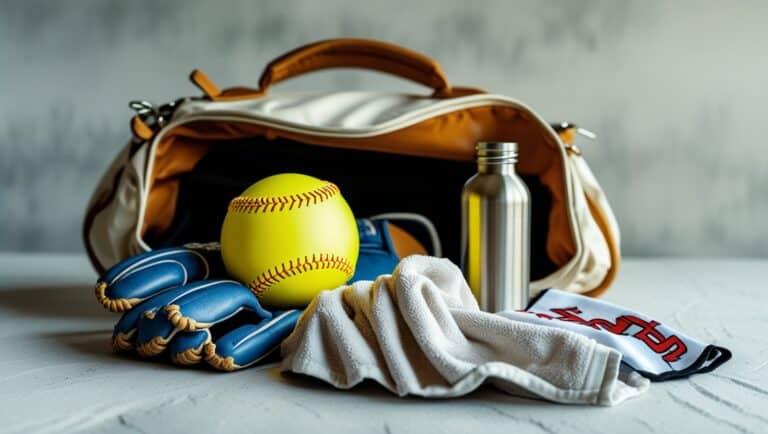
We players tend to accumulate a whole lot of gear, don’t we? I mean, think about it – you’ve got your bat, your glove, your helmet, your cleats, and let’s not forget all the protective equipment. It can start to feel like you’re carrying around an equipment shed every time you head to the field!
That’s why having the right softball bag or backpack is so crucial. I remember the early days, when I’d just toss everything into a raggedy old duffel bag and call it a day. Talk about a recipe for disaster – I’d end up with a jumbled mess of gear, and half the time I couldn’t even find what I needed when I needed it. Not exactly the ideal way to start a game!
These days, I’ve got my system down to a science. I like to mix it up between a good wheeled bag and a reliable backpack, depending on the situation. The wheeled option is perfect for those long tournament days, when I’ve got a ton of stuff to haul around. The extra storage space and easy mobility are a total lifesaver.
But for everyday practices and local games, I usually opt for a trusty backpack. It just makes the whole getting-to-the-field process so much smoother. I can keep my hands free, and the weight is distributed evenly across my back. Plus, I find the backpack style bags tend to have a bit more organization and compartmentalization built-in.
Speaking of compartments, that’s a big one for me. I mean, who wants to be digging around in a black hole of a bag, trying to find their batting gloves right before it’s their turn at bat? Not this gal, that’s for sure. I always look for bags with plenty of pockets, sleeves, and dividers to keep everything nice and tidy.
And let’s not forget about durability. Softball can be a real rough-and-tumble sport, so you want a bag that can stand up to the wear and tear. Reinforced bottoms, sturdy zippers, and heavy-duty fabric are all must-haves in my book. The last thing you want is for your trusty softball carrier to fall apart mid-season.
I know, it might not be the most exciting aspect of the game, but trust me, having the right bag or backpack can make all the difference. When you’re able to keep your gear organized, protected, and easily accessible, it just takes so much stress out of the whole experience. You can walk onto that field feeling confident and ready to play your heart out.
So don’t be afraid to invest a little time and money into finding the perfect softball bag. It might not be the flashiest piece of equipment, but it’s an absolute essential. Trust me, your future self will thank you when you’re able to breeze through pregame prep without any headaches or hassles. Let’s play ball!
Types of Softball Bags:

Post Game Recap:
Whew! We’ve covered a lot of ground, haven’t we? From bats to bags, we’ve gone through all the essential softball equipment you need to play your best game in 2024.
Remember, having the right gear is important, but it’s not everything. The most crucial things you bring to the field are your skills, your attitude, and your love for the game. I’ve seen players with top-of-the-line equipment strike out, and I’ve seen players with hand-me-down gloves make spectacular catches.
That being said, investing in quality gear can definitely improve your performance and, more importantly, keep you safe on the field. Always make sure to check your league’s regulations for equipment standards – you don’t want to be caught off-base with illegal gear!
Now, I want to hear from you! What’s your go-to piece of softball equipment? Do you have any funny stories about equipment mishaps? Share them in our social media channels, who knows, your experience might save a fellow player from making the same mistake!
Remember, softball is all about having fun, staying safe, and always striving to improve. So gear up, step up to the plate, and knock it out of the park!
Craving more softball wisdom? Unlock game-changing tips by Clicking Here!