Popular Softball Time Management Guide For 2026!


How do you have the best softball time management? Softball time management is the deliberate planning and execution of training, games, recovery, academics, and life obligations to optimize skill development, reduce burnout, and improve on-field performance. Every player, coach, and parent knows the struggle of late practices running past dinner time, weekend tournaments that clash with school projects, and the constant juggling act between athletic dreams and academic responsibilities. This softball time management guide gives weekly routines ideas, editable practice templates, express 20–30 minute training sessions, time-saving drills with exact durations, and coach scheduling tips you can use right away.
Why Time Management Matters For Softball Players
Effective softball time management delivers measurable benefits that extend far beyond the diamond. Players who structure their weekly routines can see improved skill retention, fewer late homework incidents, better physical recovery, lower injury risk, and superior game-day readiness. Organized planning creates positive momentum in multiple areas of life and helps coaches run practices more efficiently.
- Structured practice sessions improve skill acquisition rates
- Planned recovery periods reduce overuse injuries
- Academic-athletic balance prevents burnout and maintains long-term motivation
- Time-blocked training allows for deeper skill focus and faster improvement
For more on the benefits of organizing effective practices, see the Little League resource on organizing effective practices.
Core Time-Management Principles For Athletes
Prioritization
Prioritization means listing commitments by importance and deadline, then using an Eisenhower Matrix system to separate urgent tasks from important ones. This helps you decide your weekly focus without getting overwhelmed.
- Make a weekly list of all obligations
- Mark your top 3 athletic goals for the week
- Flag immovable items like games and tests
- Rank remaining tasks by deadline and importance
For coaching-focused time strategies, review this coach’s playbook: proven strategies to manage time.
Time Blocking & Batching
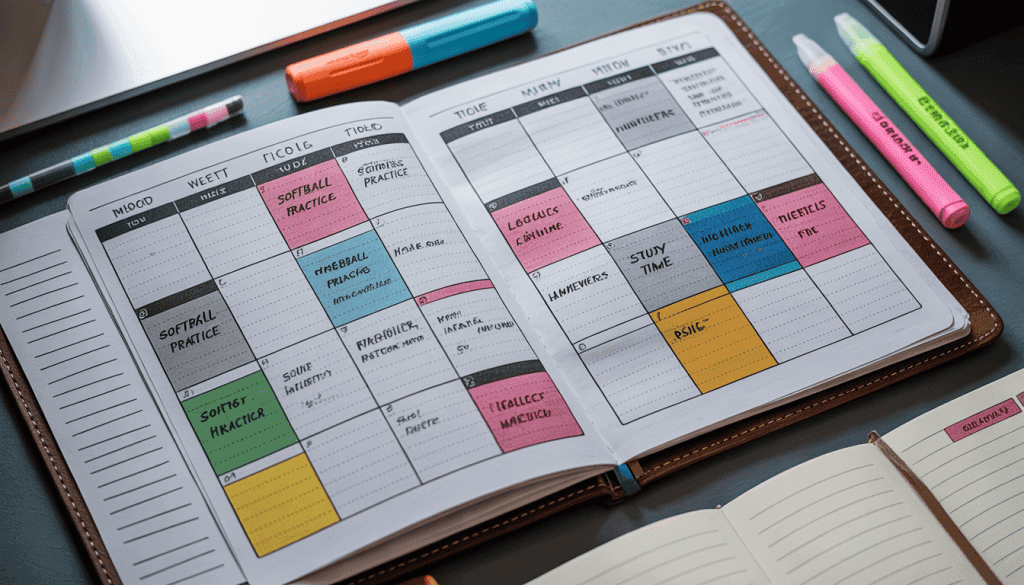
Time blocking means allocating specific chunks of calendar time to tasks (e.g., 3:45–5:45 PM for team practice). Batching means grouping similar tasks together, such as running all throwing progressions before moving to hitting circuits. This reduces setup time and maintains mental focus which makes softball time management more effective.
- 30–90 minute training windows with clear start and end times
- Grouped skill work (hitting, fielding, pitching) in separate blocks
- Scheduled homework blocks before evening practice when possible
- Built-in transition time between activities
See practical coaching ideas at softball coaching.
SMART Goal Setting For Softball Players
SMART goals are Specific, Measurable, Achievable, Relevant, and Time-bound. Example: “Improve on-base percentage from 35% to 40% over the next 6 weeks by focusing on plate discipline during practice.” Clear targets make daily practice time far more effective.
- Hitting: Increase hard-hit ball percentage by 10% in 4 weeks through daily tee work
- Pitching: Reduce walk rate from 4 per game to 2 per game over 8 weeks
- Defense: Reduce fielding errors from 4 per game to 2 per game in 6 weeks
Recovery & Rest As Scheduled Tasks
Recovery is active planning, not an afterthought. Schedule sleep, mobility work, and at least one full rest day weekly just like you schedule practice. When recovery is planned as part of softball time management rather than accidental, you preserve energy for both softball and academics.
- Target 8–9 hours of sleep nightly for teenage athletes with no less than 7 hours
- Schedule 15–20 minute mobility or foam rolling sessions
- Plan one complete rest day weekly, possibly two which is ideal after tournaments
- Include light active recovery like walking or easy stretching
Guidance on recovery principles can be found on Fans Only Sports at softball rest and recovery.
Building A Weekly Softball Routine
Creating an effective softball time management schedule starts with a systematic approach. Follow these five steps to build your personalized routine.
- Step 1: Map immovable obligations like class schedules, work, and family events
- Step 2: Add fixed athletic commitments including team practices, games, and travel
- Step 3: Insert academic blocks for homework, tutoring, and study times (schedule before evening practice when possible)
- Step 4: Slot skill maintenance and express training sessions on heavy academic days
- Step 5: Reserve at least one full rest day and one light recovery session weekly
These steps support planning weekly softball routines and ensure nothing important is overlooked.
Sample Weekly Template A — Youth Player (Ages 8–11)
- Monday–Friday:
- 3:30–4:45 PM: School homework and snack time
- 5:00–6:00 PM: Softball fundamentals practice (45–60 minutes)
- 7:00–7:30 PM: Reading and light study
- Saturday:
- 9:00 AM–12:00 PM: Weekend practice or games
- If games occur, move study time to evening hours
- Sunday:
- Active rest with 30-minute skill play
- 20–30 minute family study catch-up time
This template emphasizes fun, fundamentals, and manageable time commitments for younger athletes.
Sample Weekly Template B — High School Competitive Player
- Monday: Team practice 4:00–6:00 PM (structured 120-minute plan)
- Tuesday: 30–45 minute individual skill session after school, then 7:00–9:00 PM study block
- Wednesday: Game day or live batting practice 5:00–8:00 PM; use travel time for homework when possible
- Thursday: Express 30-minute session focused on weakness areas plus mobility work
- Friday: Recovery day with lighter review and dedicated study block
- Saturday: Tournament games with planned meal and study times
- Sunday: Recovery day plus 60-minute technical skill session
This schedule supports competitive play while emphasizing academic success.
Sample Weekly Template C — Multi-Sport Athlete (Periodized)
- Off-season: 3 softball skill sessions + 2 cross-training sessions weekly
- In-season: 2 softball skill sessions + maintenance work for secondary sport
- Periodization rules:
- Prioritize primary sport during its season
- Maintain 1–2 sessions weekly for secondary sports
- Use transition weeks between seasons for recovery
This periodized approach helps multi-sport athletes balance sports and academics while avoiding overtraining.
Effective Softball Practice Planning & Productivity
Successful practice planning starts with four essential rules that maximize softball time management every minute on the field.
- Write clear objectives at the top of every plan covering technical, tactical, physical, and mental goals
- Time-box each segment with specific durations and include rotation maps to eliminate waiting in lines
- Assign a drill leader and timer for each station to maintain accountability and pace
- Prepare equipment in advance to minimize transition time between activities
Full Practice Plan A — 45–60 Minute “Standard Practice”
0–10 Minutes: Dynamic Warm-up. Begin with a sport-specific warm-up to raise core temperature and activate movement patterns. See a sample warm-up at softball warm-up routine.
10–25 Minutes: Throwing progressions and fielding fundamentals — time-boxed stations with a drill leader. 25–40 Minutes: Hitting circuit or live reps focused on the day’s specific objective. 40–55 Minutes: Situational work or small-sided scrimmage with clear coaching points. 55–60 Minutes: Cool-down and mobility (5–10 minutes) plus quick team recap and homework for next session.
Key Take Aways
Softball time management is a force multiplier for softball players. When you prioritize, time-block, set SMART goals, and schedule recovery, you get better results on the field and in the classroom. Small, consistent improvements to how you plan practices and study time compound into meaningful performance gains. Ready to put this into action?
Frequently Asked Questions
How many hours per week should a youth softball player practice?
For ages 8–11, keep structured practice to 3–6 hours per week outside of games, focusing on short, high-quality sessions (30–60 minutes) to protect attention and reduce burnout.
How do I balance schoolwork with evening practices?
Use time blocking: schedule a homework block before practice when possible, prioritize deadlines each week, and use travel or warm-up times for low-attention tasks like revision or reading.
What should I do on recovery days?
Prioritize sleep, light mobility or foam rolling (15–20 minutes), and active recovery like walking. Treat the rest day as part of the weekly plan rather than an optional break.
Can multi-sport athletes still progress in softball?
Yes, use periodization: prioritize the primary sport during its season, keep 1–2 maintenance sessions for the secondary sport, and include transition weeks to recover and shift focus.
Where can coaches find practice planning resources?
Coaches can use time-boxed plans, station-based rotations, and drill leader assignments. For additional ideas on organizing practices or softball time management refer to the resources linked throughout this guide and below.
Craving more softball wisdom? Unlock game-changing tips below!