9 Guaranteed Softball Hand-Eye Coordination Elite Drills

Softball hand-eye coordination is the synchronized ability to process visual information and execute precise hand movements: critical for tracking pitches, timing a swing, cleanly fielding grounders and reliably catching fly balls. This fundamental skill separates good players from great ones across every position and skill level.
Whether you’re a youth player learning to track your first pop fly or an advanced athlete refining split-second reactions, improving your softball hand-eye coordination directly impacts your batting average, fielding percentage, and overall game performance. Softball hand-eye coordination exercises aren’t just practice, they’re the foundation of consistent athletic success.
This comprehensive guide delivers step-by-step assessment tools, progressive drill sequences, youth modifications, sample training plans, and tracking templates that coaches and players need for measurable improvement. You’ll discover how to build softball hand-eye coordination performance training programs that develop the visual processing and motor control skills essential for elite play.
Research confirms that visual-motor integration skills directly impact athletic performance across sports, and targeted training produces meaningful improvements in reaction time and movement precision. Studies on tennis ball drills also show substantial transfer to softball hand-eye coordination specific skills.
Who This Guide Is For
- Players (Beginners → Advanced): Assessment tools, progressive drills, and measurable goals for continuous improvement
- Coaches: Ready-to-run drills, progressions, and troubleshooting strategies for team development
- Parents: Home practice activities and youth-specific modifications for safe, effective skill building
- Youth Program Coordinators: Age-appropriate progressions and attention-span strategies for group instruction
Quick Assessment: Baseline Tests For Softball Hand-Eye Coordination
Before beginning any hand-eye coordination workout program, establish measurable baseline data to track improvement and set realistic goals. These four tests require minimal equipment and provide quantifiable starting points. Retest every 3–4 weeks to measure progress and adjust intensity.
Ball Toss Catch Test
Stand 10 feet from a partner who tosses 20 tennis balls underhanded at chest height with 1.5 second intervals between tosses. Record successful catches using both hands.
Scoring Targets: Youth players should achieve 15+ catches; advanced players target 18–20 successful catches.
Progressions: Single-hand catches, faster toss intervals, or smaller balls (reaction balls) increase difficulty as coordination improves.
This assessment measures sustained visual tracking and bilateral hand coordination under time pressure.
Wall Toss Reaction Test
Position yourself 5 feet from a solid wall. Throw a tennis ball against the wall and catch the rebound. Complete as many consecutive catches as possible in 60 seconds without dropping.
Target Scores: Beginners typically yield 10–20 consecutive catches; advanced athletes achieve 30+ catches.
Coaching Cue: “Soft hands, eyes fixed on contact point” helps maintain focus throughout the assessment. This drill measures reaction time, visual tracking, and sustained hand-eye coordination.
Reaction Ball Assessment
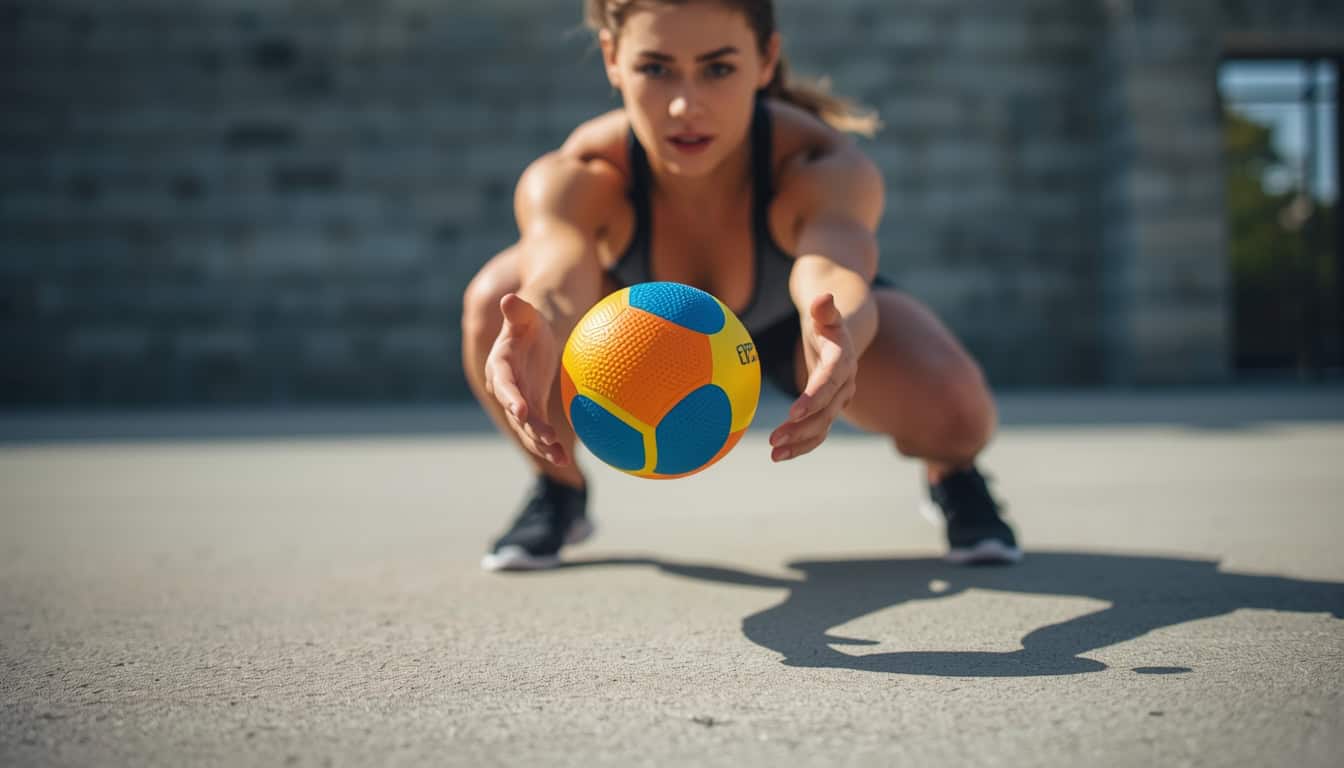
Drop a reaction ball from shoulder height, allowing it to bounce once before attempting to catch it. Complete 10 attempts, recording successful catches.
The irregular bounce pattern challenges your ability to process unpredictable visual information and make rapid motor adjustments: key skills for handling bad hops, deflected balls, and other game situations requiring quick adaptation. See recommended equipment in the home training essentials.
Interpretation: This assessment reveals your softball reaction time drills baseline and ability to improve reflexes through targeted training. Related transfer effects are discussed in research on tennis ball drills.
Tracking Drill Baseline
Have a partner slowly move a tennis ball in figure-eight patterns for 10–15 seconds while you track it using only eye movement (no head movement). Then progress to catching the ball while maintaining smooth tracking.
Scoring: Record the duration of smooth eye movement without jerky tracking or head compensation. Follow with 10 catch attempts during continued figure-eight movement. This baseline establishes visual endurance and hand-eye coordination exercises that support all other coordination skills.
Retesting Schedule: Repeat all assessments every 3–4 weeks. Improvements of 15–30% within 4–6 weeks indicate effective programming and consistent practice.
Warm-Up & Visual-Motor Mobility (8–12 Minutes)
Proper preparation activates the neuromuscular pathways essential for coordinated movement while reducing injury risk during higher-intensity softball hand-eye coordination sessions.
Dynamic Upper-Body Sequence
Begin with arm circles (10 forward, 10 backward) progressing from slow to fast movement. Complete wrist rotations (10 each direction) to activate forearm and hand muscles.
Add resistance band pull-aparts (2 sets of 12 with light resistance) and scapular wall slides (2 sets of 8) to engage shoulder stabilizers critical for batting and throwing mechanics. Finish with torso rotations and hip openers (8 repetitions each side) to establish full-body coordination patterns that transfer to softball-specific movements.
Purpose: This sequence primes the kinetic chain from core to fingertips, ensuring optimal force transfer and movement control. Research supports that dynamic warm-up protocols enhance motor learning and skill retention. See a recommended softball warm-up routine.
Visual Tracking Priming (2–3 minutes)
Perform thumb tracking exercises by moving your thumb through horizontal, vertical, and diagonal patterns while following with your eyes only. Complete 30 seconds per pattern without head movement.
Progress to partner ball tracking by having a partner hold a ball and move it slowly through various paths while you maintain visual focus for 60–90 seconds. These drills activate the ocular muscles controlling eye movement and enhance processing speed essential for tracking pitched balls and fielding applications (training reference).
Activation Drills (2–3 sets)
Complete alternate-hand toss sequences – toss a tennis ball with your right hand and catch with your left, then reverse. Perform 10 throws per hand for 2 sets, gradually increasing toss height and speed.
Add light tee focus work with 10 soft swings emphasizing visual contact between ball and bat. This primer establishes the mind-muscle connection needed for more challenging batting drills and bridges the gap between general warm-up and sport-specific skill development.
Core Drill Categories: Progressive Drills for Batting, Fielding, Catching, Reaction & Agility
Batting: Progressive Drills to Sharpen Visual Timing
Effective softball batting hand-eye coordination requires precise visual tracking combined with perfectly timed motor execution. The following progressive drills develop both components systematically.
Soft Toss Progression
Position a feeder 8–10 feet away at a 45-degree angle. Begin with slow, predictable tosses while the feeder announces “ready” before each ball.
Execution: Focus on tracking the ball from release to bat contact. Complete 3 sets of 15 swings with 60–90 seconds rest between sets.
Progressions: Increase toss speed → eliminate verbal warnings → move feeder closer → introduce smaller balls (tennis balls).
Coaching Cues: “See it to the bat” and “short to the ball” help maintain visual focus and compact swing mechanics.
Measurable Goal: Track solid contact percentage, aiming for a 10% improvement over 4-week training blocks. This foundational drill develops how to improve softball hand-eye coordination through repetitive visual-motor practice.
What This Means For You
Improving softball hand-eye coordination is a process of measured assessment, consistent practice, and progressive overload of visual and motor challenges. By combining baseline testing, structured warm-ups, and sport-specific drill progressions, players and coaches can produce reliable gains in batting, fielding, catching, and reaction performance.
Use the assessments and progressions here as a framework: adapt intensity, volume, and complexity to the athlete’s age and skill level, and retest regularly to confirm meaningful improvement.
FAQ
How often should players train hand-eye coordination?
Short, frequent sessions (10–20 minutes) 3–5 times per week produce better retention than one long weekly session. Integrate brief coordination work into daily warm-ups and dedicate focused sessions 2–3 times weekly for progressive drills.
What equipment is most useful for improving coordination at home?
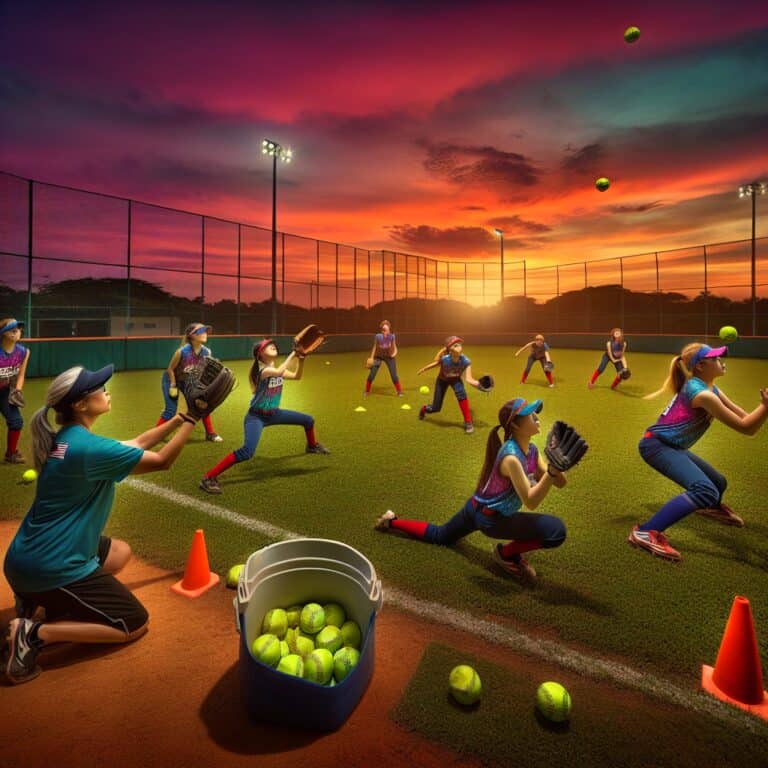
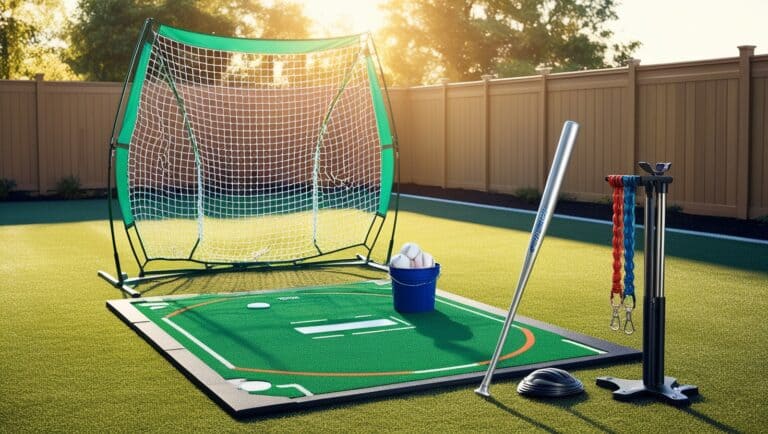
Essential items include tennis balls, reaction balls, a soft toss bucket or feeder, a bat and tee, and lightweight resistance bands. A simple list of recommended items and inexpensive options can be found in home training equipment guides (home training essentials).
How do I adapt drills for younger athletes?
Reduce task complexity and shorten drill duration. Use larger balls, slower speeds, and additional visual cues. Keep progressions playful (games, mini-competitions) to maintain engagement and reinforce positive repetitions.
How will I know if the program is working?
Track the baseline tests and drill-specific metrics (solid contact rate, consecutive wall toss catches, reaction ball success). Expect measurable gains (often 15–30%) in 4–6 weeks with consistent practice; adjust load and complexity when progress plateaus.
Craving more softball wisdom? Unlock game-changing tips below!